Skip to content

SILEX Fiberglass Windows & Doors

Impact of Solar Heat Gain on Fenestration Durability

    And Why Material Choice Matters More Than You Think

    Windows and doors are more than just architectural features — they are essential components of a building’s energy performance, comfort, and durability. While much attention is given to insulation and energy efficiency, solar heat gain can have a serious impact on the longevity of fenestration products if not properly considered. In this blog, we’ll explore how solar heat affects windows and doors, the hidden risks it creates, and why material selection is critical for long-term performance.

    What Is Solar Heat Gain in Windows?

    Timely Insight on Cross-Border Trade


    Solar heat gain
    is the increase in temperature that occurs when sunlight (short-wave radiation) passes through windows or is absorbed by window and door frames.

    For insulated glass units, it is measured by the
    Solar Heat Gain Coefficient (SHGC) — a value between 0 and 1 that indicates how much solar radiation passes through a glass unit.


    But here’s the key:

    Even if the glass is designed to manage solar energy, the window frames themselves (especially black or dark window frames) absorb significant heat — sometimes reaching extreme surface temperatures on hot, sunny days. This is especially true for south or west-facing homes or buildings with black window frames exposed to direct sunlight.

    Expert Insight: Supporting Data from Industry Professionals

    Recent insights from Anton Van Dyk, a respected building science consultant and fenestration expert, support the challenges created by solar heat gain on dark window frames. In his review of material performance under elevated surface temperatures, Anton notes that black or dark-colored vinyl frames can reach extreme temperatures that exceed the material’s thermal limit — leading to bowing, warping, and long-term seal failure.


    His observations reinforce what we’ve seen in the field: material selection — especially for color and frame composition — has a direct impact on the long-term durability of windows under solar exposure.

    How Solar Heat Affects Window and Door Durability

    1. Material Deformation and Warping

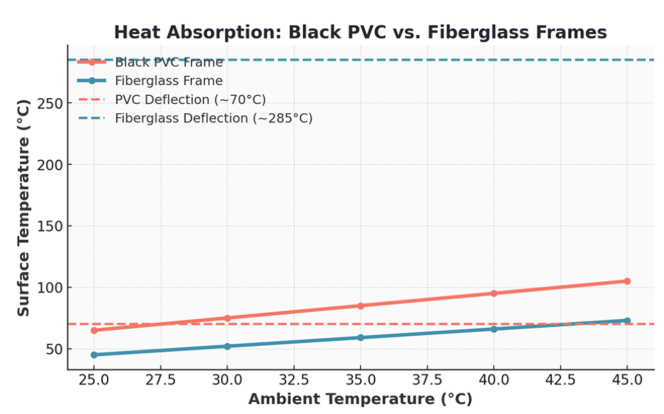
      When frames absorb high levels of solar energy, their surface temperature can exceed 70°C (140°F) — even higher on black or dark-colored window frames.
      If the material’s heat deflection temperature is too low, it can soften, warp, or permanently deform over time.

        • PVC Window Frames: PVC starts to soften at around 60–70°C. Dark PVC frames, in particular, are vulnerable to bowing, twisting, and seal failures under intense sunlight. These frames are often affected by solar gain and thermal expansion, which leads to structural integrity issues over time.
        • Fiberglass Window Frames: Pultruded fiberglass withstands much higher temperatures (above 280°C) before deforming, maintaining dimensional stability even under direct sun exposure. This makes fiberglass windows in Canada an ideal choice for long-term durability.

          Hear Absorption - Black PVC vs. Fiberglass Frames Table

    2. Thermal Expansion and Contraction

      All materials expand when heated and contract when cooled. But excessive thermal cycling (day-night temperature swings) stresses materials at their joints, fasteners, and seals.

        • PVC expands about 7x more than fiberglass under heat.

        • Frequent expansion and contraction can cause gaps, cracked seals, and water infiltration over time — key concerns in window frame solar heat damage.


    3. Sealant and Glazing Adhesion Failure
      Heat-stressed frames can cause sealants to fail prematurely, breaking the critical air and water barriers.
      Thermal bowing can also stress the glazing pocket, risking glass unit seal failure and reducing the lifespan of the insulated glazing unit (IGU).
    Fiberglass vs Vinyl Windows: Why Frame Material Matters

    When it comes to resisting solar heat gain damage, not all window frames are created equal:

    Feature

    PVC Frame

    Fiberglass Frame

    Heat Deflection Temperature

    ~60–70°C

    280°C+

    Thermal Expansion Rate

    High (7x fiberglass)

    Very Low

    Structural Strength Under Heat

    Weakens significantly

    Maintains strength

    Durability in Dark Colors

    Poor (deformation likely)

    Excellent


    Expansive & Deflection of PVC and Fiberglass Frame Table

    Bottom line:

    • Dark PVC frames may look good initially but can degrade quickly under solar stress, especially in hot or exposed installations.
    • Fiberglass window frames offer superior heat resistance, dimensional stability, and long-term durability, making them ideal for modern, energy-efficient buildings — even with dark finishes.

    Real-World Considerations: Best Windows for Sun-Exposed Homes

    In sun-exposed climates across Canada, from the hot summers of British Columbia to Southern Ontario and the Prairies, managing solar heat gain in windows is critical.


    It’s not just about lowering energy costs. It’s about ensuring long-term structural integrity and seal durability for windows and doors, especially on south- or west-facing elevations where sunlight is most intense. Architects, builders, and homeowners choosing fenestration products should always ask:

      • What material are the window frames made of?
      • What is the frame’s rated performance under heat?
      • Has thermal expansion been considered in the installation details?
      • Are these black window frames durable under sun exposure?


    Choosing high-performance materials like pultruded fiberglass ensures that beautiful windows stay beautiful — and structurally sound — for decades to come.

    Conclusion: Building for the Long Term

    Solar heat gain isn’t just an energy conversation, and in fact, it’s a durability and investment protection issue. Choosing window and door systems that can withstand high solar loads ensures better comfort, lower maintenance, fewer warranty issues, and a longer building lifespan.


    At
    SILEX Fiberglass Windows & Doors, we design our fiberglass window frames specifically to withstand extreme temperatures and solar exposure, ensuring you get lasting performance in every installation.


    Interested in learning more?

    Contact us today to find out how SILEX can help make your next project stronger, smarter, and built to last.

    Experience the difference of high-performance windows and doors for both residential and commercial spaces. From cozy home renovations to modern commercial buildings, SILEX delivers exceptional quality, style, and service.